AI in Safety Needs Purpose, Not Hype

Brady Keene
Co-founder, COO and Head of Safety
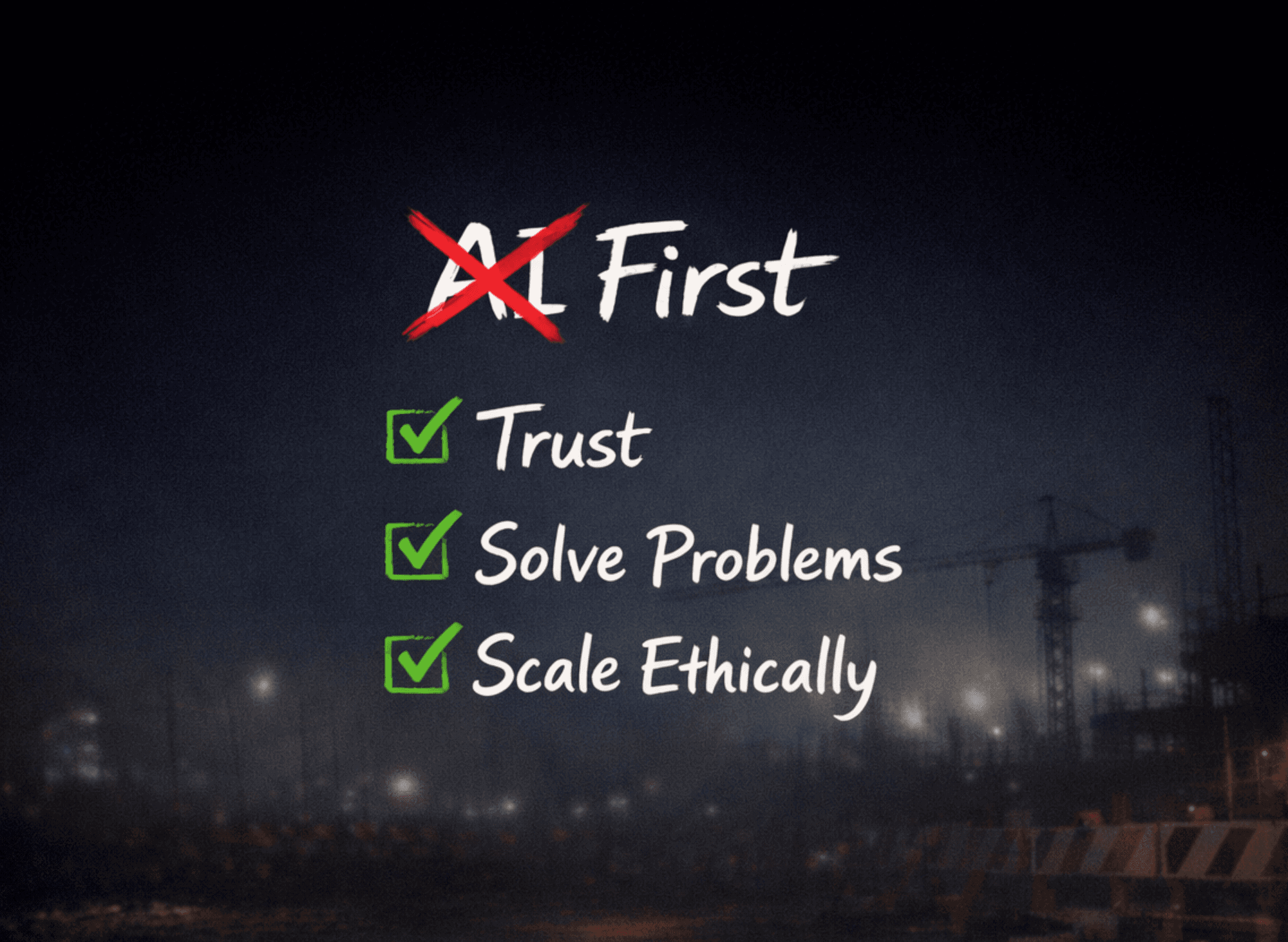
At a glance: Artificial intelligence is entering Environmental Health and Safety fast, but much of the market is filled with shallow tools rather than meaningful operational innovation. Many so-called AI first products prioritize demos over reliability, eroding trust and slowing adoption in real work. The goal is not to chase AI. The goal is to apply it with purpose so it strengthens decision making and risk management.
Artificial intelligence is rapidly entering the Environmental Health and Safety Profession. New AI safety software platforms appear weekly, each promising automation, insight, and transformation. Yet many organizations are discovering that the AI market is becoming flooded with imitations rather than meaningful innovation.
Too many teams are building with hope instead of purpose. The excitement around enterprise AI pricing and valuations has driven a rush to market, but the operational reality tells a different story. AI is difficult to scale. It is expensive to operate reliably. Few organizations are prepared to support it long term. Many so-called AI first platforms are simply thin chat tools that retrieve shallow answers to minor questions and struggle to achieve real adoption inside safety teams.
This disconnect is creating frustration across the safety profession and slowing responsible AI adoption in EHS.
Why AI Is Hard to Scale in Environmental Health and Safety
Scaling AI in safety environments introduces challenges that many vendors underestimate. Reliable models require significant compute costs, data quality controls, cybersecurity protections, integration with legacy systems, and ongoing governance. Safety data is messy, unstructured, and context dependent. Field conditions change constantly.
When AI systems deliver inconsistent answers or create false confidence, trust erodes quickly. In safety operations, reliability matters more than novelty. A tool that fails in the field does not just slow productivity. It damages credibility.
Many AI safety products today prioritize demonstration value over operational value. They look impressive in sales demos but struggle to survive real workflows, unpredictable field conditions, and complex organizational processes.
The Problem With AI First Safety Software
A growing number of startups label themselves as AI first without building meaningful intelligence. In practice, many platforms simply wrap a chat interface around limited data sources and market it as innovation. Adoption remains low because the tools do not materially improve how work gets done.
Other startups promise sweeping transformation without deeply engaging with safety professionals, craft workers, or operations leaders. Products get built in isolation based on assumptions rather than lived operational reality. That approach may succeed in consumer technology. It fails in high consequence industries like construction, manufacturing, utilities, and energy.
Environmental Health and Safety depends on trust, accuracy, and consistency. When technology creates friction instead of clarity, teams disengage.
Build AI Solutions Around Real Safety Problems
Successful AI in EHS must start with real operational problems, not features that look impressive in a demo. Technology should improve decision quality, reduce friction in daily workflows, strengthen organizational learning, and improve early visibility into serious risk.
That requires direct engagement with the field. Conversations with craft workers, supervisors, safety professionals, executives, and support teams. Trust must be established before scale can occur.
AI remains software. Not every workflow needs automation or intelligence. However, several critical workflows benefit significantly when AI is applied intentionally. Learning systems, hazard recognition, data quality, sensemaking, and early signal detection are areas where AI can meaningfully improve safety performance when deployed responsibly.
Market Saturation Is Creating Poor User Experiences
The rapid growth of AI safety vendors is saturating the market and creating negative user experiences. Overpromising leads to disappointment. Disconnected tools create fragmentation. Teams become fatigued by constant platform changes and inconsistent results.
When organizations invest in AI tools that fail to deliver meaningful value, skepticism increases. Adoption slows. Curiosity declines. Even high quality solutions struggle to earn trust once the market becomes saturated with underperforming products.
This dynamic slows innovation across the entire safety technology ecosystem.
How Safety Teams Should Approach AI Adoption
Safety teams should actively lead responsible technology adoption rather than waiting for vendors to define the narrative.
- Identify High Impact Workflow Problems - Start by identifying friction points in existing safety workflows. Look for areas where information is delayed, fragmented, duplicated, or difficult to access. Focus on problems that meaningfully influence risk visibility, learning quality, or decision making.
- Run Low Risk Technology Trials - Once a problem is defined, evaluate whether a low risk technology trial could test a solution. Keep experiments small and contained. Measure learning, usability, and operational impact rather than novelty.
- Expand Through Pilots and Deployment - If the trial creates value, expand into structured pilots and controlled deployment. Continue validating reliability, scalability, and integration into daily work.
If a trial fails, capture what did not work and why. Failure provides valuable learning when documented and shared. Teams may decide to pause adoption or continue development with a trusted partner who understands the operational environment.
The real mistake is not failure. The real mistake is stopping the learning cycle.
Why Continuous Learning Matters for the Safety Profession
The current moment mirrors earlier periods of major technological change such as the expansion of long distance travel, high speed communication, and global interconnectedness. Information now moves faster than organizations can adapt.
If safety organizations do not learn alongside this shift, a growing gap will emerge between operational teams and safety teams. That gap creates misalignment, frustration, and reduced influence in operational decision making.
Safety must remain embedded in how work evolves, not positioned as a separate function disconnected from operational reality.
Applying AI With Purpose and Operational Respect
The goal is not to chase artificial intelligence. The goal is to apply it with purpose, humility, and operational respect. Build trust first. Solve real problems. Learn continuously from deployment. Let impact guide technology choices rather than marketing trends.
Responsible AI adoption in Environmental Health and Safety will not come from hype cycles. It will come from disciplined problem solving, meaningful field engagement, and a relentless focus on learning.
Keep reading
Related Posts
Continue reading with these related articles