What Is HECA, and What Do I Actually Do With It?

Brady Keene
Co-founder, COO and Head of Safety
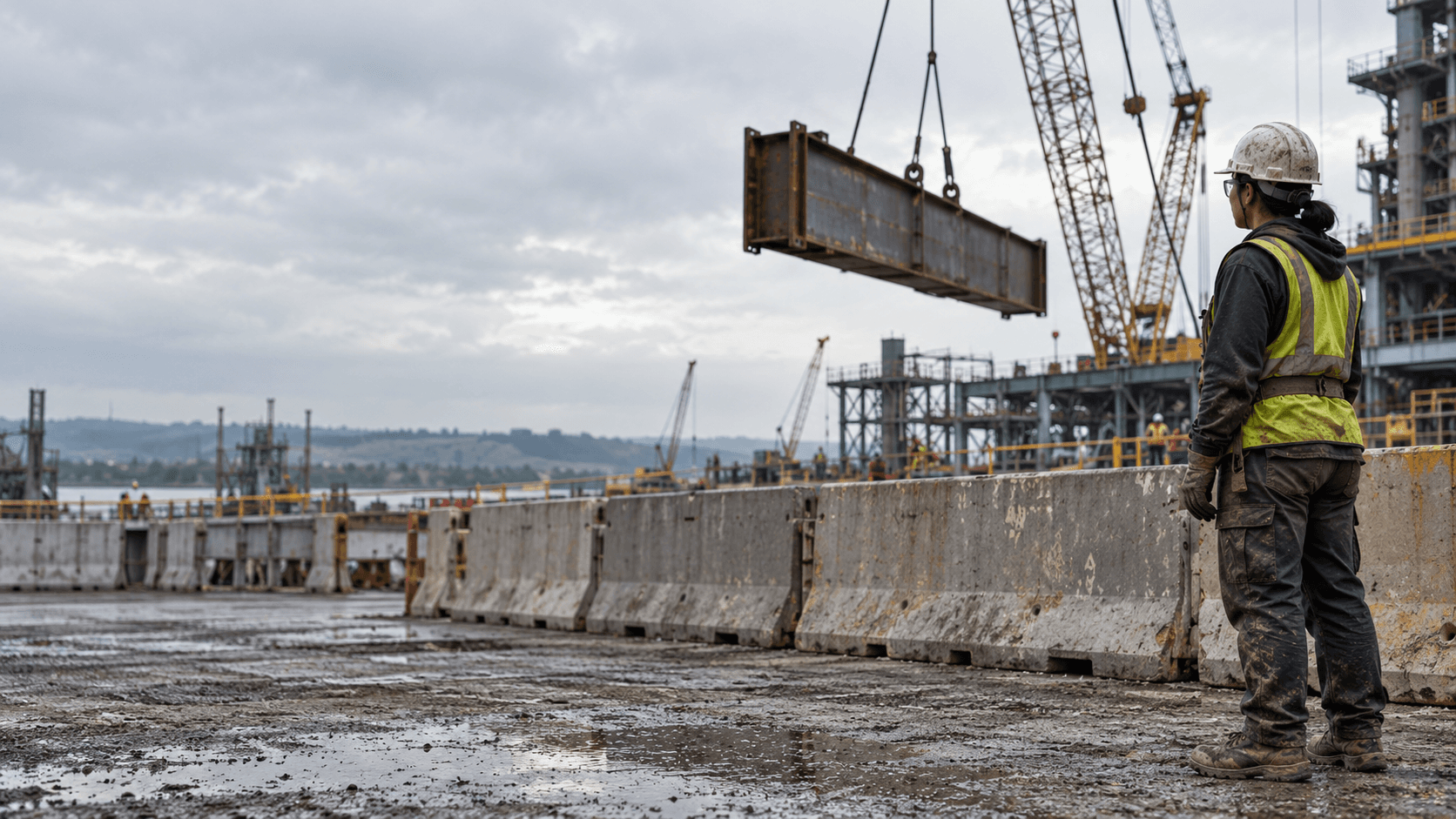
You have probably heard HECA in a meeting and nodded along. High Energy Control Assessment is a score that answers one question about a crew doing a task: of the hazards on this job that could kill someone, what share has a real safeguard in place right now? Count the high energy hazards, count how many have a direct control, and divide. Ten high energy hazards with five controlled is a 50.
It came out of the Construction Safety Research Alliance, was published by Matthew Hallowell and Elif Deniz Oguz Erkal in Professional Safety in 2023, and is governed by the Edison Electric Institute for its member utilities.
Why it exists
Recordables are rare, random, and blind to severity, and the utility sector has watched TRIR fall for a decade while fatality rates sat flat. HECA measures whether the crew was protected against the things that kill people at the moment you looked, not whether an injury happened. It rests on the finding that energy magnitude predicts injury severity and that serious injuries happen when high energy goes uncontrolled.
The three pieces
A high energy hazard carries more than 500 foot pounds. The original research drew the line at 1,500 joules, and EEI set the field threshold lower to stay conservative. Thirteen icons cover the common cases: a fall of four feet or more, a suspended load, mobile equipment or traffic near workers on foot, vehicle occupants at 30 mph or faster, heavy rotating equipment, surfaces at 150 degrees or hotter, steam, fire with a sustained fuel source, an explosion, an unsupported trench five feet or deeper, electrical contact at 50 volts or more, arc flash, and a high dose of toxic chemical or radiation. Anything outside the icons, like a tool at height, gets calculated with Safety Function's free online calculator.
A direct control has to pass three tests: it is aimed at that specific energy source, it removes or reduces the energy once installed, verified, and used correctly, and it keeps working when a worker makes an unrelated mistake. Training, signage, spotters, and situational awareness fail the third test and never count. A trench box, a harness tied to an engineered anchor, power that is isolated, verified dead, and locked out, or a hard barricade between equipment and people can all pass. Coverage has to be complete; a harness on a bad anchor is exposure, not partial credit.
The score is success divided by success plus exposure, and a task with no high energy hazards is not scored at all. The rulebook adds the mechanics: one crew, one task, one day per score, only what you can see, and verify the control is actually in use.
What the evidence actually says
The 2023 paper admitted nobody knew whether HECA predicted anything. That gap closed this summer. A study in the Journal of Safety Research, run across more than two dozen companies, found that higher HECA scores go with fewer serious injuries and fatalities over time, roughly a 3 percent drop in expected SIFs for every point of HECA, and that crews with better job briefings post higher scores.
Two cautions belong next to that, starting with observer noise. In a training experiment, HECA swung widely from crew to crew even after instruction, and the validation study counted an assessor as calibrated if they landed within two hazards of the answer key. On a job with six hazards, two hazards of slop is the gap between 50 and 83 percent, so the score is a trend across hundreds of entries, not a verdict on one crew. The other is that the whole body of work, from the energy threshold to the validation, comes from one lab, and its founder runs the company that owns the trademark and sells the training. That does not make it wrong, but nobody with an incentive to find a flaw has tested it, and a 2026 survey found only about one in six EHS leaders using energy based assessment.
A practical starting point
Skip the program launch and start with a calibration walk. Pick three to five people who already do site observations, have them learn the rulebook and the icons, then send them to the same job to score separately and compare. The first pass will disagree about which hazards count and whether a control passes the third test, and that argument is the training. Repeat it monthly.
Fold HECA into the observations you already run rather than adding a form. For each high energy hazard, record the hazard, whether a direct control was present, which control it was, and if it was missing, why: not possible, not available, or available and not used. The score is the least interesting output. The record of which controls go missing, on which tasks, in which regions, is where the learning lives.
Get the sampling right before you trust a trend. Spread observations across crews, tasks, and locations at random, daily, and never steer them toward crews you know will look good. EEI's governance report has a sizing table; about 100,000 worker hours a month needs roughly 90 to 115 entries. Do not set a target score; the moment the number becomes a goal, people find ways to hit it.
Where it goes from here
Use HECA as written and keep it about learning. The rulebook and governance report are free at safetyfunction.com, HECA is a registered trademark of Safety Function, and commercial use of the name requires a license.
If your observation program already captures energy source, SIF potential, and control status for each hazard, the score falls out of data you have. The harder problems are the ones HECA is worst at on its own: knowing when your observers have drifted apart, and whether the crews you scored this month look like the ones you did not. Those only show up when you look across every observation at once, and that is where the real value is.
Keep reading
Related Posts
Continue reading with these related articles
What is the SCL Model? A plain language guide for safety teams
Safety Observations: Quality or Quantity? The Argument Is About the Wrong Thing
One Number, Two Jobs: What EMR Can and Cannot Do for a Construction Executive